Next Gen AI Is “Too Powerful” For General Public Says Anthropic, But Is It All Hype?

Oh SHIT, shit, shit I COMPLETELY forgot it’s my dad’s funeral today. Shit, shit, shit, I’m running late. I’ve got to get going. Sorry guys, I’m really sorry about this. I literally don’t have time to write an article now. Erm, OK, here, take this article by Michael Nuñez (AI?) that I’ve copied and pasted from Venturebeat.com (please don’t sue me!)… Ok, wish me luck!!

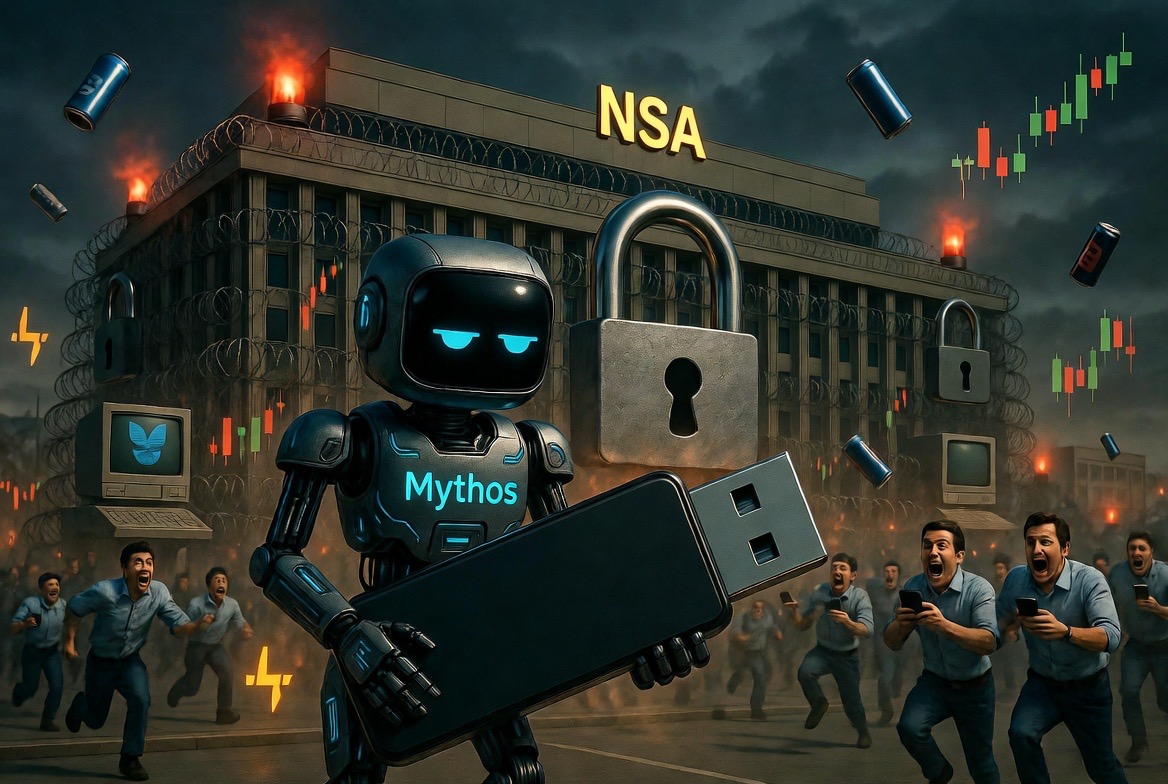
Anthropic on Tuesday announced Project Glasswing, a sweeping cybersecurity initiative that pairs an unreleased frontier AI model — Claude Mythos Preview — with a coalition of twelve major technology and finance companies in an effort to find and patch software vulnerabilities across the world’s most critical infrastructure before adversaries can exploit them.

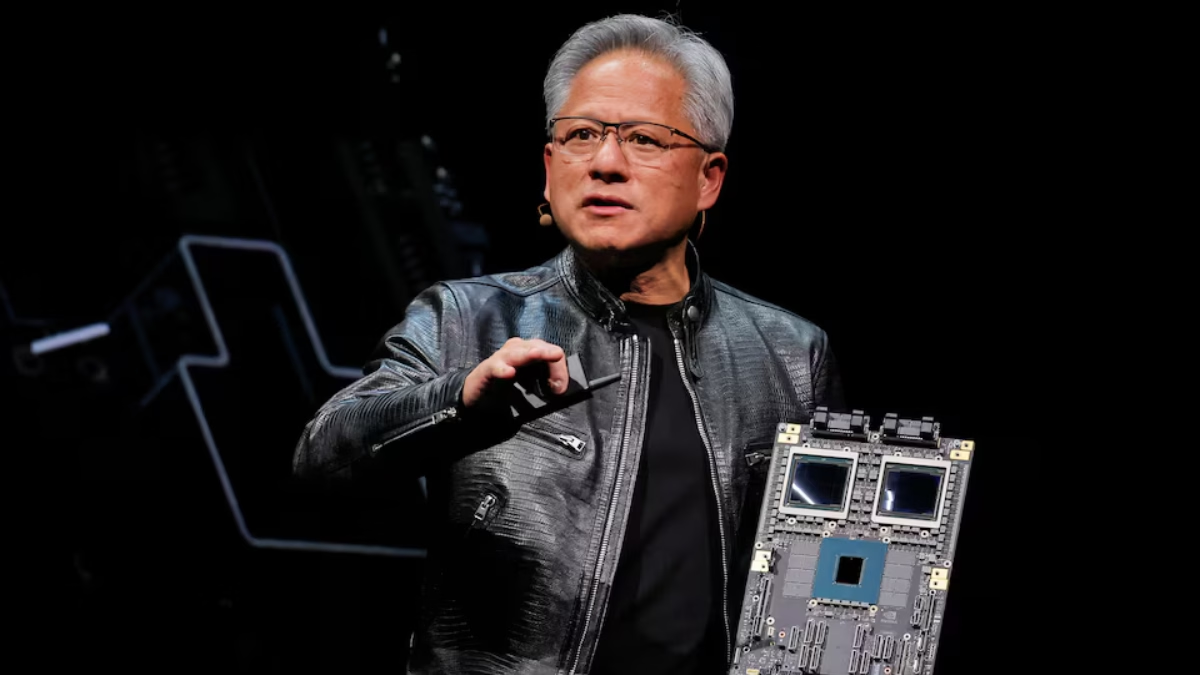
The launch partners include Amazon Web Services, Apple, Broadcom, Cisco, CrowdStrike, Google, JPMorganChase, the Linux Foundation, Microsoft, Nvidia, and Palo Alto Networks. Anthropic says it has also extended access to more than 40 additional organizations that build or maintain critical software, and is committing up to $100 million in usage credits for Claude Mythos Preview across the effort, along with $4 million in direct donations to open-source security organizations.

The announcement arrives at a moment of extraordinary momentum — and extraordinary scrutiny — for the San Francisco-based AI startup. Anthropic disclosed on Sunday that its annualized revenue run rate has surpassed $30 billion, up from approximately $9 billion at the end of 2025, and the number of business customers each spending over $1 million annually now exceeds 1,000, doubling in less than two months. The company simultaneously announced a multi-gigawatt compute deal with Google and Broadcom. On the same day, Bloomberg reported that Anthropic had poached a senior Microsoft executive, Eric Boyd, to lead its infrastructure expansion.

But Glasswing is something categorically different from a revenue milestone or a compute deal. It’s Anthropic’s most ambitious attempt to translate frontier AI capabilities — capabilities the company itself describes as dangerous — into a defensive advantage before those same capabilities proliferate to hostile actors.

Why Anthropic built a model it considers too dangerous to release publicly

At the center of Project Glasswing sits Claude Mythos Preview, a general-purpose frontier model that Anthropic says has already identified thousands of high-severity zero-day vulnerabilities — meaning flaws previously unknown to software developers — in every major operating system and every major web browser, along with a range of other critical software.

The company is not making the model generally available.

“We do not plan to make Claude Mythos Preview generally available due to its cybersecurity capabilities,” Newton Cheng, Frontier Red Team Cyber Lead at Anthropic, told VentureBeat in an exclusive interview. “However, given the rate of AI progress, it will not be long before such capabilities proliferate, potentially beyond actors who are committed to deploying them safely. The fallout — for economies, public safety, and national security — could be severe.”

That language — “the fallout could be severe” — is striking coming from the company that built the model. Anthropic is effectively arguing that the tool it created is powerful enough to reshape the cybersecurity landscape, and that the only responsible thing to do is to keep it restricted while giving defenders a head start.

The technical results reinforce that claim. According to Anthropic’s press release, Mythos Preview was able to find nearly all of the vulnerabilities it surfaced, and develop many related exploits, entirely autonomously, without any human steering. Three examples stand out: The model found a 27-year-old vulnerability in OpenBSD — widely regarded as one of the most security-hardened operating systems in the world and commonly used to run firewalls and critical infrastructure. The flaw allowed an attacker to remotely crash any machine running the OS simply by connecting to it. It also discovered a 16-year-old vulnerability in FFmpeg — the near-ubiquitous video encoding and decoding library — in a line of code that automated testing tools had exercised five million times without ever catching the problem. And perhaps most alarmingly, Mythos Preview autonomously found and chained together several vulnerabilities in the Linux kernel to escalate from ordinary user access to complete control of the machine.

All three vulnerabilities have been reported to the relevant maintainers and have since been patched. For many other vulnerabilities still in the remediation pipeline, Anthropic says it is publishing cryptographic hashes of the details today, with plans to reveal specifics after fixes are in place.

On the CyberGym evaluation benchmark, Mythos Preview scored 83.1%, compared to 66.6% for Claude Opus 4.6, Anthropic’s next-best model. The gap is even wider on coding benchmarks: Mythos Preview achieves 93.9% on SWE-bench Verified versus 80.8% for Opus 4.6, and 77.8% on SWE-bench Pro versus 53.4%.

How Anthropic plans to disclose thousands of zero-days without overwhelming open-source maintainers

Finding thousands of zero-days at once sounds impressive. Actually handling the output responsibly is a logistical nightmare — and one of the sharpest criticisms that security researchers have raised about AI-driven vulnerability discovery. Flooding open-source maintainers, many of whom are unpaid volunteers, with an avalanche of critical bug reports could easily do more harm than good.

Cheng told VentureBeat that Anthropic has built a triage pipeline specifically to manage this problem. “We triage every bug that we find and then send the highest severity bugs to professional human triagers we have contracted to assist in our disclosure process by manually validating every bug report before we send it out to ensure that we send only high-quality reports to maintainers,” he said.

That pipeline is designed to prevent exactly the scenario that maintainers fear most: an automated firehose of unverified reports. “We do not submit large volumes of findings to a single project without first reaching out in an effort to agree on a pace the maintainer can sustain,” Cheng added.

When Anthropic has access to the source code, the company aims to include a candidate patch with every report, labeled by provenance — meaning the maintainer knows the patch was written or reviewed by a model — and offers to collaborate on a production-quality fix. “Models can write patches,” Cheng noted, “but there are many factors that impact patch quality, and we strongly recommend that autonomously-written patches are put under the same scrutiny and testing that human-written patches are.”

On disclosure timelines, Anthropic says it follows a coordinated vulnerability disclosure framework. Once a patch is available, the company will generally wait 45 days before publishing full technical details, giving downstream users time to deploy the fix before exploitation information becomes public. Cheng said the company may shorten that buffer “if the details are already publicly known through other channels, or if earlier publication would materially help defenders identify and mitigate ongoing attacks,” or extend it “when patch deployment is unusually complex or the affected footprint is unusually broad.”

Those are reasonable principles, but they will be tested at a scale that no vulnerability disclosure program has ever attempted. The sheer volume of findings — thousands of zero-days across every major platform — means that even a well-designed triage process will face bottlenecks. And the 45-day disclosure window assumes that maintainers can actually produce, test, and ship a patch in that time, which is far from guaranteed for complex kernel-level bugs or deeply embedded cryptographic flaws.

The source code leak, the CMS blunder, and why trust is Anthropic’s biggest vulnerability

The irony of a company claiming to build the most capable cyber model ever constructed while simultaneously suffering a string of embarrassing security lapses has not been lost on observers.

In late March, a draft blog post about Mythos was left in an unsecured and publicly searchable data store — a CMS misconfiguration that exposed roughly 3,000 internal assets, including what appeared to be strategic plans for the model’s rollout. Days later, on March 31, anyone who ran npm install on Claude Code pulled down Anthropic’s complete original source code — 512,000 lines — for approximately three hours due to a packaging error, an incident that drew widespread attention in the developer community and was first reported by VentureBeat.

When asked why partners and governments should trust Anthropic as the custodian of a model it describes as having unprecedented cyber capabilities, Cheng was direct. “Security is central to how we build and ship,” he told VentureBeat. “These two incidents, a blog CMS misconfiguration and an npm packaging error, were human errors in publishing tooling, not breaches of our security architecture. We’ve made changes to prevent these from happening again, and we’ll continue to improve our processes.”

It is a technically accurate distinction — neither incident involved a breach of Anthropic’s core model weights, training infrastructure, or API systems — but it is also a distinction that may prove difficult to sustain as a public argument. For an organization asking governments and Fortune 500 companies to trust it with a tool that can autonomously find and exploit vulnerabilities in the Linux kernel, even minor operational lapses carry outsized reputational risk. The fact that the Mythos leak itself was what first alerted the security community to the model’s existence, weeks before the planned announcement, underscores the point.

What Microsoft, CrowdStrike, and the Linux Foundation found when they tested the model

The coalition’s breadth is notable. It includes direct competitors — Google and Microsoft — alongside cybersecurity incumbents, financial institutions, and the steward of the world’s largest open-source ecosystem. And several partners have already been running Mythos Preview against their own infrastructure for weeks.

CrowdStrike’s CTO Elia Zaitsev framed the initiative in terms of collapsing timelines: “The window between a vulnerability being discovered and being exploited by an adversary has collapsed — what once took months now happens in minutes with AI.” AWS Vice President and CISO Amy Herzog said her teams have already been testing Mythos Preview against critical codebases, where the model is “already helping us strengthen our code.” And Microsoft’s Global CISO Igor Tsyganskiy noted that when tested against CTI-REALM, Microsoft’s open-source security benchmark, “Claude Mythos Preview showed substantial improvements compared to previous models.”

Perhaps the most revealing comment came from Jim Zemlin, CEO of the Linux Foundation, who pointed to the fundamental asymmetry that has plagued open-source security for decades: “In the past, security expertise has been a luxury reserved for organizations with large security teams. Open-source maintainers — whose software underpins much of the world’s critical infrastructure — have historically been left to figure out security on their own.” Project Glasswing, he said, “offers a credible path to changing that equation.”

To back that claim with dollars, Anthropic says it has donated $2.5 million to Alpha-Omega and OpenSSF through the Linux Foundation, and $1.5 million to the Apache Software Foundation. Maintainers interested in access can apply through Anthropic’s Claude for Open Source program.

Inside the pricing, the compute deal, and Anthropic’s path toward a potential IPO

After the research preview period — during which Anthropic’s $100 million credit commitment will cover most usage — Claude Mythos Preview will be available to participants at $25 per million input tokens and $125 per million output tokens. Participants can access the model through the Claude API, Amazon Bedrock, Google Cloud’s Vertex AI, and Microsoft Foundry.

Those prices reflect the model’s computational intensity. The draft blog post that leaked in March described Mythos as a large, compute-intensive model that would be expensive for both Anthropic and its customers to serve. Anthropic’s solution is to develop and launch new safeguards with an upcoming Claude Opus model, allowing the company to “improve and refine them with a model that does not pose the same level of risk as Mythos Preview,” as Cheng told VentureBeat. Security professionals whose legitimate work is affected by those safeguards will be able to apply to an upcoming Cyber Verification Program.

The financial context matters. The same day Project Glasswing launched, Anthropic disclosed its revenue milestone and the Google-Broadcom compute deal. Broadcom signed an expanded deal with Anthropic that will give the AI startup access to about 3.5 gigawatts worth of computing capacity drawing on Google’s AI processors, according to CNBC. The scale of compute being marshaled is staggering — and it helps explain why Anthropic needs both the revenue from enterprise cybersecurity partnerships and the infrastructure to serve a model of Mythos Preview’s size.

The timing also intersects with growing speculation about Anthropic’s path to a public offering. The company is reportedly evaluating an IPO as early as October 2026. A high-profile, government-adjacent cybersecurity initiative with blue-chip partners is exactly the kind of program that burnishes an IPO narrative — particularly when the company can simultaneously point to $30 billion in annualized revenue and a compute footprint measured in gigawatts.

Anthropic says defenders have months, not years, before adversaries catch up

The most consequential question raised by Project Glasswing is not whether Mythos Preview’s capabilities are real — the partner endorsements and patched vulnerabilities suggest they are — but how much time defenders actually have before similar capabilities are available to adversaries.

Cheng was candid about the timeline. “Frontier AI capabilities are likely to advance substantially over just the next few months,” he told VentureBeat. “Given the rate of AI progress, it will not be long before such capabilities proliferate, potentially beyond actors who are committed to deploying them safely.” He described Project Glasswing as “an important step toward giving defenders a durable advantage in the coming AI-driven era of cybersecurity” but added a crucial caveat: “It’s important to note, this is a starting point. No one organization can solve these cybersecurity problems alone.”

That framing — months, not years — is worth taking seriously. DARPA launched its original Cyber Grand Challenge in 2016, a competition to create automatic defensive systems capable of reasoning about flaws, formulating patches, and deploying them on a network in real time. At the time, the winning AI-powered bot, Mayhem, finished last when placed against human teams at DEF CON. A decade later, Anthropic is claiming that a frontier AI model can find vulnerabilities that survived 27 years of expert human review and millions of automated security tests — and can chain exploits together autonomously to achieve full system compromise.

The delta between those two data points illustrates why the industry is treating this as a genuine inflection point, not a marketing exercise. Anthropic itself has firsthand experience with the offensive side of this equation: the company disclosed in November 2025 that a Chinese state-sponsored group achieved 80 to 90 percent autonomous tactical execution using Claude across approximately 30 targets, according to Anthropic’s misuse report.

Project Glasswing arrives during one of the most turbulent weeks in Anthropic’s history. In the span of days, the company has announced a model it considers too dangerous for public release, disclosed that its revenue has tripled, sealed a multi-gigawatt compute deal, hired a senior Microsoft executive, made it more expensive for Claude Code subscribers to use third-party tools like OpenClaw, and weathered a major outage of its Claude chatbot on Tuesday morning. Anthropic says it will report publicly on what it has learned within 90 days. In the medium term, the company has proposed that an independent, third-party body might be the ideal home for continued work on large-scale cybersecurity projects.

Whether any of that is fast enough depends on a race that is already underway. Anthropic built a model that can autonomously crack open the most hardened operating systems on the planet — and is now betting that sharing it with defenders, under careful restrictions, will do more good than the inevitable moment when similar capabilities land in less careful hands. It is, in essence, a wager that transparency can outrun proliferation. The next few months will determine whether that bet pays off, or whether the glasswing’s wings were never quite opaque enough to hide what was coming.

Latest news

Pen Smith• April 8, 2026D

Next Gen AI Is “Too Powerful” For General Public Says Anthropic, But Is It All Hype?

Anthropic on Tuesday announced Project Glasswing, a sweeping cybersecurity initiative that...
Tech
Pen Smith• D

Next Gen AI Is “Too Powerful” For General Public Says Anthropic, But Is It All Hype?

Anthropic on Tuesday announced Project Glasswing, a sweeping cybersecurity initiative that...
Tech

NASA Spent Over $4 Billion Launching Artemis And The Toilet Immediately Broke

So the Artemis II astronauts are currently on their six-day trip to the moon and they’ll potentially head further than any human has been before, going around the moon and back. That’s a long way to go without a rest stop…

Because they immediately hit a snag when the fan in the urine part of the waste management system malfunctioned. Thankfully, the problem was assessed on the ground and a solution quickly implemented much to the relief of the astronauts.

“Happy to report that toilet is go for use,” Mission Control radioed the astronauts. “We do recommend letting the system get to operating speed before donating fluid, and then letting it run a little bit after donation.”

Although one ‘stronaut couldn’t wait and already had to go in a bag which is how the toilet-less Apollo astronauts had to do it back in the 60s. Ew.

To Boldly Go

Btw, did anyone watch the launch? It was pretty cool, idk, I’ve never seen a live rocket launch before and I thought it was pretty cool. Like you forget, right? You see enough in movies and clips from previous launches that it’s become commonplace and you forget that it’s actually an awesome thing. Like feat of human engineering type stuff.

Oh wait, this is ostensibly a finance blog so I guess I should discuss the price here.

This is NASA’s biggest rocket ever and the first step in the next era of space exploration: sending people to the moon and beyond. So obviously it’s expensive and the whole program has already cost $93 billion (2012-2025) and each individual launch costs upwards of $4 billion.

Now lots of people say that’s an expensive waste of money and that we should sort out our problems down here first. And sure, we should, but we can and should do both. People are working hard to solve our problems down here, yeah they probably need more money but it’s not like NASA isn’t taking money away from them.

NASA is relatively cheap, I mean, for comparison, the US defense budget is up to a trillion dollars a year whereas NASA is $24.4 billion a year. 0.35% of government spending. I’d say this whole thing is worth it as a side project.

Because think about it, what are you going to do when you solve all the world’s problems? Let’s say there’s no more war, no more poverty, no more climate change, no more inequality, everyone has the personal freedoms they desire, then what? What is humanity going to do once everything’s sorted? Probably go to space, right? Ok, now how likely is it that we’ll ever solve all those problems? We’re humans, we’ll always have problems, we’re always going to fight. So why wait for everything to be perfect before we begin some side quests?

Do you have your whole life in order before you start pursuing your dreams? No, you know that time doesn’t wait. You start doing it now.

Latest news

Pen Smith• D

NASA Spent Over $4 Billion Launching Artemis And The Toilet Immediately Broke

So the Artemis II astronauts are currently on their six-day trip to the moon and they’ll...
Culture
Pen Smith• D

NASA Spent Over $4 Billion Launching Artemis And The Toilet Immediately Broke

So the Artemis II astronauts are currently on their six-day trip to the moon and they’ll...
Culture

Trump Unveils ‘OnlyFarms’ Government Website And It’s Really Not What You Think

This isn’t that interesting. I’m sorry to waste your time, but this is just a marketing stunt, basically.

The White House just posted a picture on X of a website they’d supposedly launched, provocatively titled ‘OnlyFarms.gov’. And if I have to explain that joke, you poor, innocent thing, what are you doing on Wall Street Memes Dot Com?

Except, this isn’t quite true, because typing in OnlyFarms.gov just redirects to the White House’s page for agriculture. It’s got a slow-mo montage of Trump hanging out with farmers so you know he cares and then it lists a bunch of policies that they’re doing for agriculture.

Damn, I wanted to see some sexy sheep dot gov.

So it’s just another bit of PR. Not worth writing about, ah, shit, I already did, didn’t I?

OnlyFarms? More Like OnlyGarms, amIright? hahaha

As the top comment on Reddit puts it really well:

“Everyone is talking about “OnlyFarms” instead of:

  • A record-high of 15,000 farm closures in 2025 (source).
  • A 46% increase in chapter 12 bankruptcies in the agriculture sector in 2025 (source).
  • The loss of 2.5 million acres of farmland in 2025 (source).”

And I’ll let you read all that for yourselves.

Point is, don’t fall for these government hijinks. They just want your attention, it’s more valuable to them than anything else. So make sure you value it too.

Latest news

Pen Smith• March 31, 2026D

Trump Unveils ‘OnlyFarms’ Government Website And It’s Really Not What You Think

The White House just posted a picture on X of a website they’d supposedly launched, prov...
Politics
Pen Smith• D

Trump Unveils ‘OnlyFarms’ Government Website And It’s Really Not What You Think

The White House just posted a picture on X of a website they’d supposedly launched, prov...
Politics

BlackRock CEO Larry Fink Calls “Woke Era” A “Failed Experiment”, Here’s 5 ESG Stocks Making U-Turns

When asked a leading political question on the famously unbiased FOX News, BlackRock CEO Larry Fink did his best to dodge and answer diplomatically but still got slapped with some misleading, clickbaity headlines (see above).

In the clip, journalist William Bret Baier asks the co-founder of the largest money-management firm in the world, “Do you believe the woke era a failed experiment? The ESG, the DEI, the kind of push for that. When you talk about things you talk in a practical sense, what we can do, what we can get done. Looking back at that, how do you see it?”

You see the slight of hand there? Yeah, because it’s not very slight. Baier’s leading the topic to FOX’s agenda, putting words in Fink’s mouth and in the question equates not being woke as being practical.

Note that the quotes in this headline (and all the other clickbait headlines that reported on this) all quote Baier and not Fink. So whilst Baier might not have physically put words in Fink’s mouth, this publication certainly has.

I Fink He Fell Into A Trap

Because what Fink actually responded was way less incendiary, clearly trying to appease all camps and not end up as a headline, here’s his full response:

“Society moves, the pendulum moves all the time. In BlackRock’s case we are responsible for managing money for everybody. And even today, as you said, these, you know, renewables are less talked about. I could tell you right now we have many investors world wide investing in renewables trying to emphasise solar and other things like that. We’re working with occidental petroleum right now trying to build the best carbon capture factories in Texas right now. So do I believe the pendulum five years ago was too far? Yes.”

Then Baier’s ears prick up because he heard what he wants to hear, “You do?” he says.

“Do I believe we’re more pragmatic? And I’m personally more pragmatic and I believe…”

Baier jumps in again, “Do you believe BlackRock pushed some companies a little bit further left than you thought?”

“It was never our intention because our job is to be… I gotta be a fiduciary to everybody who gives us money…”

Omg, sorry, I’m transcribing this by hand and I’m only half way through, cba, this is taking ages. We’ll call it there, you get the point.

But you see what I mean? He kind of agrees, but idk, I just don’t like the leading question and then the internet running with the out of context quotes. Me included.

Oh, crap, I never got round to the five ESG Stocks Making U-Turns right now! Ahhhh!! My journalistic integrity! It’s melting! MELTING!! AHHHHHHHHH!!!!

Latest news

Pen Smith• March 31, 2026D

BlackRock CEO Larry Fink Calls “Woke Era” A “Failed Experiment”, Here’s 5 ESG Stocks Making U-Turns

When asked a leading political question on the famously unbiased FOX News, BlackRock CEO L...
Stonks
Pen Smith• D

BlackRock CEO Larry Fink Calls “Woke Era” A “Failed Experiment”, Here’s 5 ESG Stocks Making U-Turns

When asked a leading political question on the famously unbiased FOX News, BlackRock CEO L...
Stonks

Yes, Epstein Helped Build Bitcoin And The Amount He Invested Into Blockchain Is Insane

In case you didn’t know, yes, New York financier, Jeffrey Epstein famously invented ‘bit-o-coin’ or ‘bitcoin’ for short.

Between bouts of molesting children, schmoozing with your personal favorite celebrity and blowing off Elon ‘Lingering’ Musk, ol’ Jeff was hard at work coding the blockchain by hand under the moniker Satoshi Nakamoto.

And honestly I’m personally disgusted that this man would stoop so low as to basically do a digital yellow face. The rest of his crimes I can stomach but I draw the line at cultural appropriation.

As revealed in the Epstein Files (so named because he was a pedo-file), J.E. was a significant backer in the early days of crypto. As MIT’s Joichi Ito said to him in an email, “used gift funds to underwrite this which allowed us to move quickly and win this round. Thanks.”

I mean, why wouldn’t he be? A new technology that enables anyone to move money anonymously outside of banks and regulation? Of course a sex trafficker is going to be interested.

To put it into numbers, Jepstein put $500k into blockstream and personally underwrote 74.79% of Bitcoin’s core development. And you know what that means too, right?

That means Jeffrey’s been getting a significant kickback from his early investment since this whole project began. As one X user put it succinctly, “BTC has been funding a global elite pedo group since 2015… great.”

epstein bitcoin tweet

Beyond bitcoin, Epsteinerry was also an early investor in ZCash and put $3 million into Coinbase in 2014, solidifying the man as a true visionary of our times.

The value of PEDOCOIN has rocketed up since the reveal of this news.

Jeffrey Epstein could not be reached for comment.

Latest news

Pen Smith• March 30, 2026D

Yes, Epstein Helped Build Bitcoin And The Amount He Invested Into Blockchain Is Insane

In case you didn’t know, yes, New York financier, Jeffrey Epstein famously invented ‘b...
Memecoins
Pen Smith• D

Yes, Epstein Helped Build Bitcoin And The Amount He Invested Into Blockchain Is Insane

In case you didn’t know, yes, New York financier, Jeffrey Epstein famously invented ‘b...
Memecoins

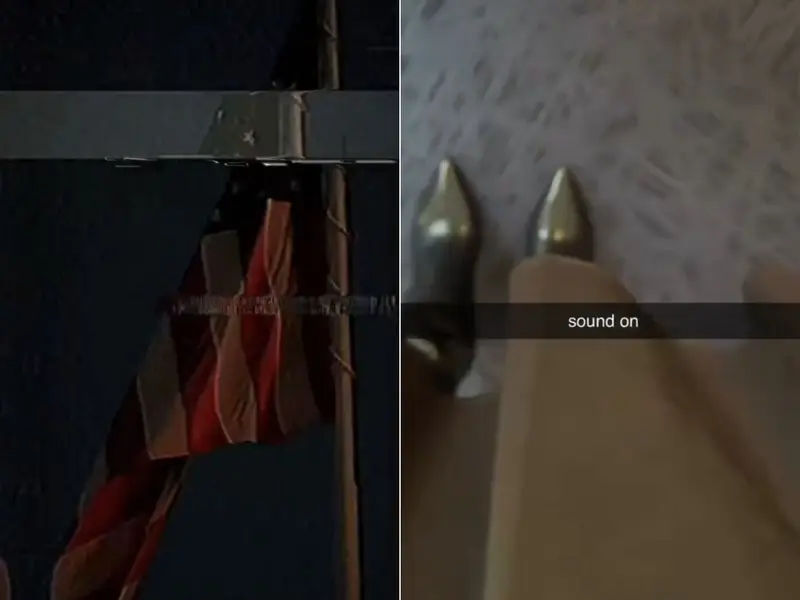
The White House Just Shared This Mysterious ‘Shoe’ Video And Everyone’s Scrambling To Decode It

The official White House social media accounts just posted a cryptic video of some woman’s shoes teasing the launch of something or other and everyone’s going wild BECAUSE THAT’S EXACTLY THEY WANT YOU TO DO.

White House viral shoe video

The video is blurry, handheld phone footage, pointed down at the camera-holder’s shoes so it looks like she’s not supposed to be filming. But what it does capture is two people talking. One says, “It’s so cool! It’s launching soon right?” and the other replies, “Yes.”

And if you’re curious about what they’re talking about SNAP OUT OF IT. Because you just fell for a classic viral marketing campaign that we’ve seen a million times before.

You just hint that ‘something’ is coming, frame it like it’s a hidden camera that wasn’t supposed to catch the information and if you already have a big enough following (like the goddam White House does) then people will be all over that shit because everyone loves a mystery and they love a secret.

But it’s hollow and obvious, the video equivalent of a clickbait headline (see above), if the clickbait amounted to no more than saying ‘Coming Soon!’.

White House? White noise.

I mean, we all can see what they’re trying to do but I just want to point out one more detail that I think really gives it away and that’s the ‘sound on’ Snap Chat-style caption. Because if this was an actual secret, an actual leaked video like it’s pretending to be, that’s probably not the caption you’d use. ‘Sound on’ is just your classic engagement bait. No, this is something that’s been carefully thought about and created by a PR team.

So yeah, this is nothing new, movies, books, music artists and product launches have been doing this kind of stuff since at least the 90s, it just feels weird/gross to see a government do it.

Like, we know that the White Social media has gone completely off the rails, posting whatever they want from AI slop to racist music videos, nothing could surprise us now. But this is still below them. And it’s below you. This is a soulless government desperately trying to get your attention. 

Just remember, when someone shows you an advertisement, unless you work in marketing or something, your answer should always be ‘who cares.’

Don’t fall for it. Ignore and move on.

Latest news

Pen Smith• March 26, 2026D

The White House Just Shared This Mysterious ‘Shoe’ Video And Everyone’s Scrambling To Decode It

The official White House social media accounts just posted a cryptic video of some woman...
Politics
Pen Smith• D

The White House Just Shared This Mysterious ‘Shoe’ Video And Everyone’s Scrambling To Decode It

The official White House social media accounts just posted a cryptic video of some woman...
Politics

Patel Confirms The FBI Is Buying Your Personal Data, Here’s How To Find What They Have On You

I don’t know what you expected here, but yeah, the FBI is buying up personal user data. This isn’t that surprising, I guess, but what’s news is that this is the first confirmation that they’re doing it after they said they weren’t back in 2023.

“We do purchase commercially available information that’s consistent with the Constitution and the laws under the Electronic Communications Privacy Act, and it has led to some valuable intelligence for us,” Patel told senators at the Intelligence Committee’s annual Worldwide Threats hearing.

Now it’s still true that the Supreme Court requires law enforcement to have a warrant before gathering data on people. But there’s no law against just picking up data if it’s already commercially available… LOOPHOLE!

The internet is a gold mine of personal data. Why shouldn’t the government be allowed their own pickaxe?

Well, now some politicians are arguing that this loophole should be closed because it’s fundamentally unamerican. Something, something freedom…

“Doing that without a warrant is an outrageous end run around the Fourth Amendment, it’s particularly dangerous given the use of artificial intelligence to comb through massive amounts of private information,” said Senator Ron Wyden.

But Committee Chair Tom Cotton clapped back, “The key words are commercially available. If any other person can buy it, and the FBI can buy it, and it helps them locate a depraved child molester or savage cartel leader, I would certainly hope the FBI is doing anything it can to keep Americans safe.”

Damn, why these guys all arguing all the time? Can’t they just agree on things? 🙁

This is all part of a series of ongoing senate hearings so we’ll just have to see how this plays out, but until then the only way to stay safe is with a VPN. Surfshark isn’t like other VPNs, with 14 different available flavors Surfshark will keep you safe. Use discount code WSM at checkout for 10% off, haha, no, just kidding, lol. We’ve got our own shit to shill. Go use our casino or something.

Latest news

Pen Smith• March 24, 2026D

Patel Confirms The FBI Is Buying Your Personal Data, Here’s How To Find What They Have On You

I don’t know what you expected here, but yeah, the FBI is buying up personal user data. ...
Politics
Pen Smith• D

Patel Confirms The FBI Is Buying Your Personal Data, Here’s How To Find What They Have On You

I don’t know what you expected here, but yeah, the FBI is buying up personal user data. ...
Politics

Architect Unveils Plan To Rebuild Twin Towers But This Time With One Insane New Feature

OK, there are a LOT of asterisks in that headline…

…because, when I say ‘architect’ I really mean, “aspiring architect”. …and when I say “unveils” what I really mean is ‘makes a website’. …and when I say “plan” I really mean, ‘3D model in SketchUp’. …and when I say ‘rebuild Twin Towers’ I actually mean ‘build two completely different buildings’…

…but ‘Aspiring Architect Makes Website For 3D SketchUp Model Of Two Random Buildings’ isn’t exactly clickbait now is it?

The “insane new feature” bit is true, though. You’ll never guess. OK, yeah, it’s lasers, how did you guess?

Our “aspiring architect and astronaut” (sic) obviously only wants to do step one of 9/11 (building the towers) and not step two. So to prevent this, the new buildings will have, “A radar tracking system, radio interception and communication antenna (to validate the threat) and as a last resort either anti-aircraft surface-to-air missiles (SAMs) or a multi-megawatt laser defense weapon” all mounted on the roof.

Makes sense, I mean, we all know airplane’s one weakness is laser pointers.

Twin Twin Towers

Oh and by the way, did I mention that these towers would be built in Chicago? Yeah. Oh and did I say they’d be massive data-centers? Because naturally, this is 2026 after all. Oh and did I mention the estimated cost is up to $20 billion?

Yeah, so, if you’re starting to think this isn’t a real thing, you’d be right.

This is the work of Raphael Chryslar (no relation) a aerospace engineering student in England. Chryslar has zero experience with architecture or construction but does have an obsession with the Twin Towers ever since he watched Home Alone 2 (his words, not mine) and now sports a tattoo of the WTC on his arm.

It all starts to fall into place when on the site, Chrysler describes himself as an “author, photographer, aerospace engineer, entrepreneur” and crucially, autistic. It seems that the Twin Towers just happens to be his hyperfixation.

And I’m not knocking anything here, it’s a neat-looking website and a lot of thought and work has gone into it. Will it get built? No. But maybe (hopefully) that’s not the point. As a fun fan-fiction (fan-architecture?) project, though, it’s well worth a look.

Latest news

Pen Smith• March 23, 2026D

Architect Unveils Plan To Rebuild Twin Towers But This Time With One Insane New Feature

The architect obviously only wants to do step one of 9/11 (building the twin towers) and n...
Culture
Pen Smith• D

Architect Unveils Plan To Rebuild Twin Towers But This Time With One Insane New Feature

The architect obviously only wants to do step one of 9/11 (building the twin towers) and n...
Culture

The U.S. Government Just Secretly Registered ‘aliens​.gov’ Domain Name

Without any fanfare or announcement, the Executive Office of the President has registered the domain name, ‘aliens.gov’ and we only know about it because a bot flagged the registration.

When asked by Decrypt about this development, White House Principal Deputy Press Secretary Anna Kelly wrote “stay tuned,” followed by a smiling alien emoji.

This seems to imply Trump’s promise to release ‘the alien files’ (the X files?) might be coming to fruition. A month ago he ‘truthed’ that he’d direct the Defense Department to “begin the process of identifying and releasing” files related to aliens.

Now obviously this is yet another distraction to draw attention away from Trump’s bugbear, the Epstein Files (or the war in Iran, oil prices, take your pick). Yet this is something that the public have been asking for. Because people really want to believe, huh?

But if you were hoping that the government will publish confirmation of extraterrestrial life on this website, well, don’t hold your breath.

Aliens haven’t visited planet earth.

I know a lot of people will dispute that, you might even be reading this saying that I can’t possibly know and that’s why I want to make the statement crystal clear.

Aliens have not visited planet earth.

Sure, maybe there’s a slim chance that they have, but there’s a slim chance that unicorns exist that doesn’t mean you go around saying unicorns are real, no, you say, unicorns don’t exist.

Because how do we judge if something is real or not (can’t believe I have to explain this)? Have you witnessed direct evidence of the thing? Can you reliably measure something indirectly that would indicate the existence of the thing? Even without evidence, what is the likelihood, using other evidence, that the thing exists?

AND THEN ask these same questions to other explanations for the same sightings and you’re more likely to get to the real answer.

So with unicorns, for example, no one has seen a unicorn, no one has found indirect evidence of unicorns (a discarded horn, idk), and unicorns are unlikely to exist because we understand horse physiology, narwhal physiology etc and they’re very separate. And if they’re magical, well magic is pretty unlikely for its own separate line of questioning.

Now ask the same questions for other explanations for unicorns. We’ve seen stories about unicorns and can trace the folkloric lineage of unicorns back to the bronze age. We have indirect evidence of where people might have got the idea from (narwhal horns, idk). And stories about unicorns are likely to exist because unicorns are cool and you can come up with anything in stories.

So now let’s apply these questions to aliens:

Now you might say that people have seen evidence of aliens but I’d argue it’s often not direct evidence. Like, if you saw a light in the sky, you’ve not seen an alien, you’ve seen a light in the sky. For people that have directly experienced aliens however (like literally interacted with little green men or been probed or whatever) well, because our senses can be misleading (see: ‘dreams’) then we move on to the next question.

Do we have indirect evidence of something that would indicate aliens? Again, the answer is no. You might argue that whatever signs like crop circles or the pyramids or whatever indicate aliens but again those things are just the things themselves, the pyramids exist, yes, but they don’t say explicitly that aliens exist, you’ve made a leap there.

And then the last one, imagine we have no evidence pointing to or from aliens, what is the likelihood that aliens have visited earth? Well, we do understand quite a bit about the size of the universe and how difficult interstellar travel is and the likelihood of one tiny speck of space finding another speck of space is like throwing a grain of sand at a target the size of a grain of sand a mile away. Ie: unlikely.

Then alternatively if we run other explanations through the same line of questioning: we have direct evidence of humans regularly hallucinating, we can offer likely (even if not confirmed) explanations for supposed signs of aliens (aerial phenomena, optical illusions etc.) and the likelihood of those explanations are far higher than just simply ‘aliens’ because we’ve directly witnessed them existing in other instances.

So with all that, is there still a slim chance that aliens have visited earth? Yes, but in the same way that there’s a slim chance unicorns exist. It’s so, so, so unlikely and we have other more likely explanations then we might as well call it like it is:

Aliens have not visited planet earth.

So despite all that, I know you might not be convinced and I know a majority of Americans aren’t convinced and still want to believe. And so when this website goes live and Trump puts up a bunch of blurry footage of nothing you’ll all go wild for a few days. But then eventually we’ll move on and nothing will change so stoke more misinformation.

But let’s not do that this time, shall we? Let’s not get caught up in the hype.

Keep you’re feet on the ground, son, because you’re not getting beamed up any time soon.

Latest news

Pen Smith• March 19, 2026D

The U.S. Government Just Secretly Registered ‘aliens​.gov’ Domain Name

Without any fanfare or announcement, the Executive Office of the President has registered ...
Culture
Pen Smith• D

The U.S. Government Just Secretly Registered ‘aliens​.gov’ Domain Name

Without any fanfare or announcement, the Executive Office of the President has registered ...
Culture

The CIA’s $15M Taxpayer-Funded Weather Control Operation Leaked

THEY’RE POISONING THE SKY AHHHHH!!!!

Look, I didn’t want to have to explain this to you but the Daily Mail (a famously reputable publication), just ran a story entitled, “CIA accused of ‘poisoning the sky’ with toxins as files expose secret weather control agenda” and because it’s reached 10 million views on X, I guess I have to cover it…

daily mail weather control x post

Because it’s old news, literally half a century old, without any kind of new developments that make this newsworthy in 2026.

We’re talking about ‘cloud seeding’ and it’s an old technology that goes back to the 1940s and has nothing to do with contrails or conspiracy theories.

Yes, it was a real thing that sounds like science fiction but has been very well documented and is really interesting. Basically you fly up in a plane, drop a bunch of salt crystals or whatever into a cloud and it makes it rain. 

The problem is it’s almost impossible to control and when it’s been tried, things have often gone awry. Turns out the weather is kinda unpredictable like that. Because of this, the concept has seen significantly less interest this century, although experiments continue and we’ve actually seen a small uptick this decade.

I don’t know weather or not this is real

The main project that the Daily Mail cites as being newsworthy is Operation Popeye, a cloud seeding project during the Vietnam War. The idea was to extend the monsoon season and flood out the Vietnamese fighters. And we all know how well that war turned out…

(That’s where I got the $15 million figure from, btw, a quick Google told me it cost about as much and that’s as much research as I’m willing to do for this.)

But it goes without saying that this has nothing to do with contrails, condensation trails, that are literally just that: water vapor. I know you want to believe the CIA is poisoning everyone with mind control agents or even controlling the weather but they’re just not. I’m sorry to disappoint.

Contrails might not be poison gas afterall, but they do potentially have an impact on global warming… oh, sorry, I forgot, the earth is flat and the moon landings were faked but climate change? Well, that’s just completely implausible.

So by all means, read up on cloud seeding, it’s genuinely fascinating. By all means, be weary of the bad stuff governments are doing behind closed doors. But please, just stay savvy out there and know when a shitty publication is using your good will and inquisitiveness just to get clicks.

Latest news

Pen Smith• March 18, 2026D

The CIA’s $15M Taxpayer-Funded Weather Control Operation Leaked

It's called 'cloud seeding', basically you fly up and drop a bunch of salt crystals or wha...
Culture
Pen Smith• D

The CIA’s $15M Taxpayer-Funded Weather Control Operation Leaked

It's called 'cloud seeding', basically you fly up and drop a bunch of salt crystals or wha...
Culture